
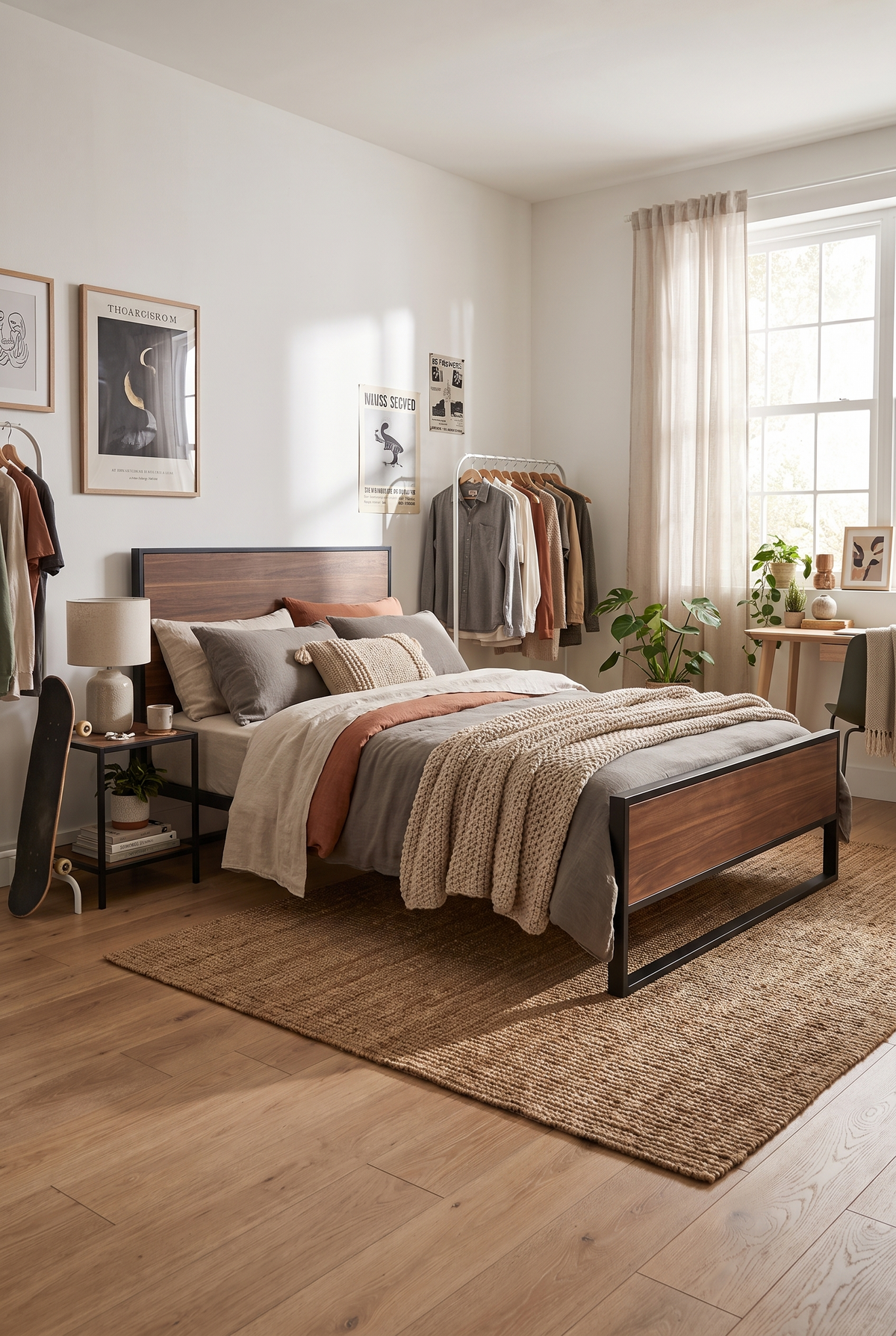
A small bedroom can feel calm and functional when every piece is selected from a measured plan. The goal is not to fill every wall with storage, but to preserve comfortable movement while using height, corners and the space beside the bed efficiently.
Draw the room before choosing furniture
Measure every wall, door, window, column and electrical outlet. Record the direction in which the door opens and the position of air-conditioning units or curtains. Draw the room to scale, then add the bed, wardrobe and bedside storage as rectangles. This simple step prevents many delivery and installation problems.
Start with the bed footprint
The bed is usually the largest item, so place it first. Check the mattress size and the full external dimensions of the frame because headboards and side rails can add noticeable width and length. Where possible, keep clear access on the sides that will be used daily and enough space at the foot of the bed for comfortable movement.
Protect the main circulation route
A clear route of roughly 60 to 75 centimetres is a useful target in many bedrooms, although existing rooms may require compromises. Prioritize the path from the door to the bed, wardrobe and window. Use masking tape on the floor to test furniture footprints and drawer openings before ordering.
Choose storage by access, not capacity alone
A deep wardrobe is not useful if its doors cannot open. Measure the wardrobe body and the extra space required by hinged doors or drawers. Sliding doors can help in tighter layouts, while open wardrobes make frequently used clothes easy to access and can create a lighter visual feel when kept organized.
Use vertical space intelligently
Tall storage can provide more capacity without consuming additional floor area. Keep everyday items within easy reach and reserve upper shelves for seasonal bedding, luggage or less frequently used items. Wall shelves can be useful, but avoid placing heavy or projecting shelves where people rise from the bed.
Keep bedside furniture proportional
A bedside table should support essentials without blocking the wardrobe or room door. Its top works best near the mattress height. In very compact rooms, consider a narrow table, a wall-mounted shelf or one shared surface rather than forcing two oversized pieces into the layout.
Create zones inside the wardrobe
- Hanging space for long and short garments.
- Drawers or boxes for smaller items.
- Adjustable shelves for folded clothes.
- An upper zone for seasonal storage.
- A clear place for shoes and bags.
Planning these zones before choosing a wardrobe helps you compare useful storage rather than judging only the outside dimensions.
Use light and colour to reduce visual weight
Consistent finishes, a limited colour palette and visible floor area can make a compact bedroom feel calmer. Furniture with raised legs or open sections may look lighter, while mirrors can reflect light when positioned safely. Good task lighting beside the bed also reduces the need for large decorative surfaces.
Plan delivery and assembly
Measure the building entrance, lift, stairs, corridor turns and bedroom door—not only the final room. Large furniture may arrive in components, but access still needs to be confirmed. Remove fragile items and identify the intended furniture position before the delivery team arrives.
Small-bedroom checklist
- Measure the room and access route.
- Confirm the full bed-frame dimensions.
- Protect the main walkway.
- Allow space for wardrobe doors and drawers.
- Use height for less frequently used storage.
- Keep bedside pieces compact and accessible.
Plan your room with VINCHi modern beds, compare wardrobes and open metal wardrobes, and finish the layout with bedside tables and dressers.
Frequently asked questions
What should I buy first for a small bedroom?
Start with the bed because it determines the remaining circulation and storage space. Then choose the wardrobe and bedside furniture from the space left in the measured plan.
Are open wardrobes suitable for small rooms?
They can work well because they offer direct access and a visually lighter structure. They require regular organization, and the layout should still provide enough hanging, shelf and drawer capacity for your needs.
How can I add storage without making the room feel crowded?
Use taller storage, choose furniture with efficient internal divisions and avoid several small pieces that interrupt circulation. A single well-planned unit often works better than multiple mismatched cabinets.


Leave a comment
This site is protected by hCaptcha and the hCaptcha Privacy Policy and Terms of Service apply.